

I should’ve known it was going to be a problem the moment the excuses started. ‘Just give me one more week, I promise.’ Then another. Then another. By the time I finally had enough, I was knee-deep in Georgia’s eviction process, which—let me tell you—isn’t as quick as you’d hope and it isn’t as quick or simple as some landlords like to believe.
You’ll hear people say, “If they don’t pay, I post their notice and they’re out in a week.”
Sure—if everything goes perfectly. But in reality?
- Non-payers don’t just stop paying—they actively work to stay as long as possible without paying.
- They know the system and use every trick to drag out the process.
This tenant was no different. And here’s how it played out.
Unlike land-lease mobile home parks where tenants own their homes, we own the homes in this community. That means our eviction process looks more like an apartment eviction—we’re removing the tenant, not the home.
When we took over this community, we inherited a lot of late payers and non-payers. Many left within the first few months when they saw how we ran things. The late fees were enforced. The notices weren’t empty threats. The reality hit them fast, and they packed up and left.
But then there are the ones who string it along.
- They make partial payments to keep hope alive.
- They make promises they can’t keep.
- They give excuse after excuse.
- Family emergencies or unexpected bill took their money!
This tenant fell into that category. Long before eviction, we tried to work with her. We gave her chances. We accepted partial payments. But after breaking multiple agreements, it was time to act.
Our Eviction Strategy
We never want to evict. It’s time-consuming, expensive, and a hassle for everyone. But when a tenant refuses to pay, we have three steps before pulling the trigger:
1. Work With Them First
We offer payment plans, accept partial payments, and try to give people a chance—if they have a real way to catch up.
But here’s the problem…
Most inherited tenants have been trained by the previous owner to game the system.
- Skip a month?
- Pay catch-up with tax returns?
- Push it just enough without getting evicted?
They get used to no consequences.
2. Offer a Voluntary Move-Out
If a tenant can’t or won’t get back on track, we offer them a way out without an eviction on their record.
- Leave in 30 days.
- No eviction filed.
- No judgment.
- Just go, clean out the house, and leave the key behind.
It works. 15 out of 17 tenants in this Park left voluntarily when we took over. No fights. No extra damages.
But then there are the ones who push it to the limit.
3. File the Eviction
Two tenants refused to leave. They kept making promises, making small payments, and even scheduled move-out dates—but then didn’t leave.
So we filed evictions.
- One left immediately after being served.
- The other? She wanted to fight it.
And that’s where the real fun began.
The Eviction Process: What Really Happens
Long before things reached the point of eviction, I tried to handle it personally.
I knocked on the door, hoping to speak with her directly. Instead, her kids answered. She wasn’t home. They got her on the phone, and I laid it out clearly—rent hadn’t been paid, eviction was coming, and it was time to figure out a move-out plan.
She immediately started negotiating.
- More time.
- Another chance.
- Promises to pay.
We went back and forth for 15 minutes before I finally said:
“I’m going to court to file the paperwork. If we don’t receive payment before then, I’m filing.”
I don’t enjoy these conversations—especially when kids are involved. But this wasn’t the first time. We had given her every chance.
I went back to work in the park, expecting that to be the end of it.
An hour or two later, a car pulled up on me.
It was her. But this time, she had her entire family in the car.
Kids in the back. Windows down.
She had them all wave at me and say hi—right before she started negotiating again. A clear manipulation tactic.
I had to stand my ground. No more deals. No more extensions.
“Without payment, the eviction is being filed.”
It wasn’t easy. Looking into those kids’ eyes while standing firm on removing them from their home was brutal.
But it had been months of this.
- Partial payments.
- Broken promises.
- More excuses than I could count.
I had no choice.
And at the end of the day, it’s not fair to the tenants who do pay their rent to let someone keep skirting the rules.
Step 1: The Filing
I didn’t actually need to go to the court house, this county allows us to file online and even pay online. So we filed online, which made life easier. The county then served her, and she had 7 days to respond.
Step 2: The Tenant Fights Back
She responded, claiming the amount I filed was wrong.
It wasn’t. I had actually underreported what she owed because I didn’t include all the late fees. But now, we had to schedule a court date and delay the process even further.
I was out of state, so I had to coordinate with the court. No community manager was on-site yet, so I had to drive in. They gave me some options, and I picked one two weeks out.
Step 3: Court Day (The No-Show Win)
I waited an hour for our case to be called.
When it was, I stood up.
She didn’t. She never even showed.
Automatic win.
The judge signed off, and I went back to the clerk’s office. A writ of possession was issued, meaning we could legally remove her.
Step 4: The Sheriff, the Stalling, and the Excuses
I contacted the sheriff to schedule the move-out.
Problem:
A cold front was coming in, and Georgia law pauses evictions when temps drop below freezing.
So now, she got another 10 days—more time than I wanted to give, but I had no choice.
As soon as the sheriff served her, the phone calls and emails started blowing up.
- “I didn’t know about the court date!” (She did.)
- “This isn’t fair! I need more time!” (She had months.)
- “I PROMISE I’ll leave at the end of the month!” (Yeah, right.)
We denied it. Move-out was happening.
Step 5: The Final Showdown
The Night Before
I had someone check if she was packing.
Nope. Not a boxes in sight, they were still there.
I alerted my crews and the sheriff.
Move-Out Day
The sheriff arrived, and—shocker—she started stalling.
- “We just need more time.”
- “Someone is coming to help us move.”
- “We’re almost done.”
The sheriff was new to evictions and decided to “give them more time.”
I was pissed.
I called him. “No. They’re out today.”
After wasting hours, his supervisor finally gave him the green light, and we started the removal.
That’s when the arguing started.
- “You’re stealing our fridge and stove!” (No, we’re not, they belong to the unit.)
- “We need two more days to move our broken-down car!” (Not happening.)
- “You can’t take our window A/C units!” (They were covered in mold. I let them have them.)
I couldn’t believe it. After everything, they were arguing about the damn stove and fridge.
Threatening to sue. Screaming at my crew. Refusing to leave until it was “resolved.”
The sheriff had to call me directly:
“They’re claiming the stove and fridge are theirs. Can they take them?”
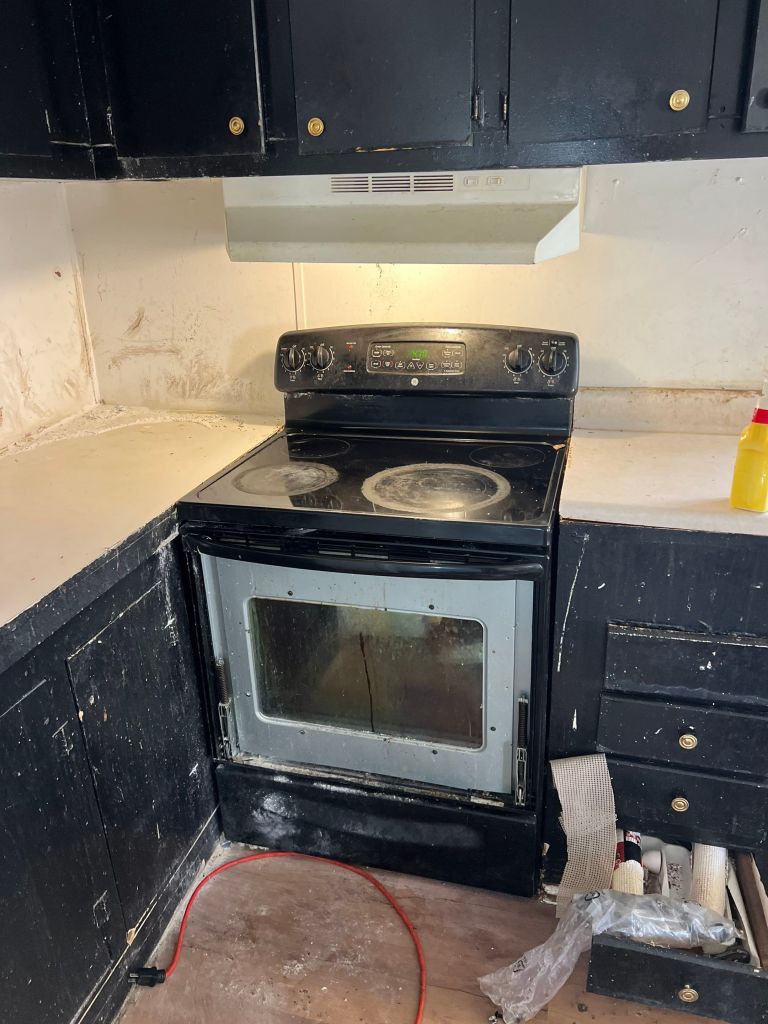
Technically, the appliances belonged to the unit. But they swore up and down they had replaced them. I had no way to prove otherwise—we inherited this tenant and didn’t have before photos.
Then the crew sent me pictures of the appliances in question.
I could only laugh. Busted. Broken. Filthy.
The stove looked like it had been pulled from a junkyard. The fridge wasn’t much better.
Fine. Take them. If it meant getting them out faster, I wasn’t going to fight over trash.

Meanwhile, my crew started sending me photos.
- Dead rats.
- Live rodents.
- Adult toys mixed with kids’ toys.
- Trash and rotten food on the floor in piles of clothes.
It was disgusting.



Step 6: The True Cost of Eviction
- $2,000+ in removal costs and hauling fees for the junk they left behind
- Multiple months of lost rent totaling $2100 without the accrued late fees included.
- Court filing costs
- Rekeying & securing the unit
Will we recover this money? No.
Could we chase them for a judgment? Yes.
Is it worth it? Probably not.
Tenant Screening Matters
This was an inherited tenant, but it reinforced what I already knew:
- Screen aggressively.
- Require proper deposits.
- Don’t let non-payers drag things out.
And after all this? The home still wasn’t ready to rent.
- A full turnover process has to begin.
- Another 30+ days for repairs.
- Another 30+ days to find a new tenant.
- 3-4 months of lost income from start to finish.
This is why good management matters.
Final Thoughts:
Evictions aren’t quick, easy, or cheap—especially when tenants know how to game the system. This story follows the eviction of a tenant who spent months making excuses, missing payments, and dragging out the process.
Despite multiple chances, promises to pay, and even a voluntary move-out offer, she refused to leave. When we finally filed for eviction, she contested it, forcing a court date. She then failed to show up, giving us an automatic win—but even then, the delays continued. A cold front paused enforcement, the sheriff hesitated, and when move-out day arrived, she fought every step of the way.
In the end, she left behind months of unpaid rent, thousands in removal costs, a trashed unit, and a disgusting mess—including live rodents and abandoned junk. The total damage? Lost income, wasted time, and a lengthy turnover process.
This is why tenant screening, strong enforcement, and acting fast are crucial. Evictions aren’t just about lost rent—they’re about time, costs, and headaches.
Lesson learned? The quicker you deal with a problem tenant, the better. I stand by our strategy and most of the time the residents take us up on our offer and leave as promised to avoid the eviction filing. However, nothing is 100% fool proof. When that one situation occurs, you have to be ready and able to deal with the courts and their process.
Do you want to discuss this article or just talk about Parks in general? Use this link here to schedule a 1-on-1 Zoom video chat with me and Let’s Talk!
Join our Capital Partner Network and get priority on New Investment Opportunities. Receive Real Case Studies, invites to Educational Passive Investing Webinars, and Deal Webinars. JOIN NOW by using THIS LINK.
Lock N’ Load
The MHP Operator
Disclaimer: The information provided in this article is for educational and informational purposes only. It is not intended as financial or legal advice. I am not a licensed financial advisor, lawyer, or CPA, and you should consult with a licensed professional before making any legal or investment decisions.
